Over the last few years, online dog training has exploded – and while that’s great for accessibility, it’s also made it much harder to separate genuinely effective programs from polished marketing.
We created this guide for one simple reason: we wanted to know which dog training courses actually work in real homes, with real dogs.
So we tested them.
Not once. Not briefly.
Between our own dogs and long-term reader feedback, we’ve observed these programs across multiple breeds, ages, and behaviour profiles – in everyday environments where training either holds up or falls apart.
This list is the result.

Every course included here met three non-negotiable standards:
- Measurable improvement when applied consistently in real life
- Ethical, evidence-informed methods appropriate to the problem being addressed
- Clear, structured instruction that real owners can follow
Some popular programs didn’t make the cut.
A few specialist options appear only at the end, reserved for situations where everything else has already been applied correctly and failed.
NOTE: If you’re specifically looking for a course to raise a new puppy between 8–18 weeks, see our guide to the Best Online Puppy Training Courses

Why FREE Online Dog Training Courses Rarely Work
Free dog training content feels like the responsible place to start – and as an introduction, it often is. In reality, it’s also where things quietly go wrong.
The issue isn’t that free advice is useless. It’s that most free online dog training lacks structure, depth, and accountability. During a dog’s early learning stages, that matters. Inconsistent guidance doesn’t just slow progress; it creates habits that are harder and more expensive to undo later.
Quality training isn’t a collection of tips. It’s a system – built around progression and real-world follow-through. Trainers who deliver consistent, reliable results can’t sustainably give that away for free.
Free previews and workshops? Great.
They’re a smart way to evaluate a program. But stitching together scattered advice and calling it a training plan rarely ends well.
Do training properly once, and you save yourself months (if not years) of frustration. That’s the real difference between free content and training that actually holds up.

How We Tested Online Dog Training Programs
We don’t rank online dog training courses based on hype or popularity alone. We rank them on whether they work in real life – and whether they still hold up over time.
Each program had to meet the same standards:
- Realistic expectations, set upfront rather than oversold
- Clear explanations of why techniques work
- Behaviour change outside controlled training sessions
- Consistent performance across different breeds and temperaments
- A genuine money-back guarantee, allowing enough time to apply the training properly
We also considered long-term reader feedback from owners who followed these courses over time. That’s important, because plenty of programs feel promising in the first week – then quietly stop delivering once real-world distractions appear and training needs to generalise beyond ideal conditions.

13 Best Online Dog Training Courses
This isn’t a popularity list. It’s a results list.
We tested dozens of programs and focused on what actually matters: trainer credibility, ethical methods, clear structure, real-world usability, and a genuine money-back guarantee if the training didn’t deliver.
Price wasn’t a deciding factor when assessing the best online dog training programs. Results were.
Most courses here are built for everyday obedience and behaviour work. A small number are included for narrow, high-risk cases where conventional training has already been applied correctly and failed.
Every course below costs less than ongoing private training and, when applied properly, often produces more reliable long-term outcomes.
1. K9 Training Institute (Best Overall)

When K9 Training Institute (K9TI) first launched, it caused a quiet storm in the dog training world, and years later, it’s still one of the best online dog training courses that others are measured against.
That staying power isn’t clever marketing. It comes from doing what most courses never quite manage: teaching owners how dogs actually understand the world.
Instead of relying on endless verbal commands, K9TI is built around body language–based communication – the same silent cues used by service dogs and working dogs to respond quickly and reliably.
This approach is especially powerful if you’ve tried ‘doing everything right’ and your dog still:
- Pulls on the leash
- Ignores recall
- Jumps on people
- Barks excessively
- Bolts through doors
- Chases animals or cars
- Nips, chews, or selectively ignores commands
Rather than suppressing behavior, K9TI focuses on changing how your dog thinks and responds. We would describe it as giving dogs clear structure – leadership without force, boundaries without fear.
The training is led by Dr. Alexa Diaz, one of the most highly respected dog behaviorists in the United States, alongside Eric Presnall, host of Animal Planet’s Who Let the Dogs Out. The delivery is calm, practical, and grounded in science – not dominance, punishment, or gimmicks.
It’s also realistic. You don’t need prior experience or hours a day. All it takes is around 10-15 minutes a day using the techniques from their workshops.
K9TI’s transparency is another reason it continues to lead the pack.
They offer a generous free workshop that walks through the core method using real dogs in real situations, so you can see exactly how it works before committing.

Their Total Transformation Masterclass includes live Q&A calls with professional trainers, and, critically, everything is backed by a 90-day money-back guarantee (the longest refund window offered by any online dog training course).
That length matters.
It reflects a level of confidence we rarely see, and gives owners the time needed to apply the training correctly and assess whether it truly works for their dog.
Across multiple dogs, breeds, and environments, we’ve seen the same outcome: clearer communication, calmer behaviour, and fewer regressions over time. That consistency is why it remains our top recommendation in 2026.
2. SpiritDog Training (Best Variety)

SpiritDog Training is the platform we recommend when owners don’t need to rebuild everything – but do need specific problems handled properly.
Rather than offering one overarching system, SpiritDog provides a well-organised library of targeted courses, each built around a common real-world issue owners actually face.
This makes it especially useful for owners searching for behavior training for dogs that are mostly well behaved, but struggle in predictable situations.
Common use cases include:
- Obedience Training
- Loose Leash Walking
- Tackling Reactivity
- Resource Guarding
- Focus around distractions

The courses are structured, practical, and easy to apply in everyday environments.
One standout is Perfect Focus, which addresses a frustration many owners hit: dogs that perform flawlessly at home, then ignore everything once distractions appear. Used consistently, it bridges that gap effectively.
SpiritDog’s platform design also matters more than it sounds. The lessons are short, mobile-friendly, and easy to revisit mid-walk or mid-training – which directly improves follow-through and consistency.
Take a quick tour of all available classes here
With a large user base, consistently strong ratings, and a solid reputation, SpiritDog’s popularity isn’t accidental.
Just as important, it’s backed by a 60-day money-back guarantee. That’s enough time to commit, apply the training properly, and judge the results honestly.
If you’re looking for flexible online dog training that works without starting from scratch every time, SpiritDog is absolutely worth checking out.
3. Dunbar Academy (Best Monthly Membership)

Dunbar Academy is the course we most often wish owners had taken before problems started.
Created by veterinarian and animal behaviourist Dr. Ian Dunbar, this platform focuses on prevention, early learning, and developmental timing – areas many modern programs gloss over entirely.
The emphasis isn’t on flashy results. It’s on helping owners understand:
- What dogs are learning even when you aren’t training
- How reinforcement is accidentally misapplied
- Why certain problems form – and how to prevent them altogether
This approach is especially powerful for puppies, where missed developmental windows can quietly create issues that surface months later.
Owners who follow Dunbar’s principles early tend to need far less corrective training down the line, which is why we rate their standalone New Puppy Training Course in the No.1 spot.
Some of the course library includes:
- Bite inhibition and early impulse control
- Dog–child interactions
- Reliability and impulse-control games
- Early aggression prevention (Growl Class)
The monthly membership gives access to the full Top Dog Academy library, live webinars, and a private community, all backed by a 30-day money-back guarantee.
Dunbar Academy isn’t flashy (and that’s exactly the point). It consistently reduces the need for ‘fixes’ later – one of the strongest outcomes any online dog training program can deliver.
4. Brain Training for Dogs (Best Low-Cost)

Brain Training for Dogs is the course we recommend when budget matters – but standards don’t drop.
Low-cost online dog training courses usually comes with trade-offs: shallow content, gimmicks, or methods that don’t hold up beyond the first few sessions. This course avoids most of those traps by focusing on something many owners overlook entirely – mental work as behaviour control (in a fun way).
Created by Adrienne Farricalli, a CPDT-KA certified trainer, the program uses simple, force-free exercises that are easy to apply without overthinking.
We’ve found it works best for bored, unfocused, or mildly disruptive dogs (the kind that aren’t ‘problem dogs’) but do constantly test limits.
There’s very little theory, no complicated setups, and no filler – you’re shown what to do and expected to apply it.
As a low-cost, low-friction entry point (and 60 day money back guarantee), it performs better than most options in its price range.
If you’re looking for an affordable way to improve focus and reduce everyday problem behaviours (without committing to a full program) Brain Training for Dogs holds its ground.
5. Brandon McMillan (Best for Obedience Training)

Brandon McMillan’s course does one thing exceptionally well: it teaches dogs to be reliably obedient.
As an Emmy Award–winning animal trainer, his professional polish shows. The training is focused, no-nonsense, and built around the commands that actually matter day to day – sit, stay, come, leash behaviour, and house training – without drifting into theory or behavioural philosophy.
Compared with many online dog training courses, the structure is tight. The program is broken into 15 clear lessons that build logically, making it especially effective for new dogs, first-time owners, or anyone who wants a clean obedience reset without overcomplicating things.
The video demonstrations are excellent and easy to revisit, and access via a MasterClass subscription makes it simple to return to specific commands over time. Everything is backed by a 30-day money-back guarantee, giving you space to apply the training properly and decide if the approach fits.
If your priority is a dog that listens, understands boundaries, and behaves predictably, Brandon McMillan’s Masterclass earns its place as Best for Obedience Training.
6. Fenzi Dog Sports Academy (Best Agility)

Fenzi Dog Sports Academy is not casual online dog training – it’s serious skill-building for people who want to do agility properly.
Founded by Denise Fenzi, the academy is widely respected in competitive dog sports circles, and it shows in the material. The agility courses are precise, technical, and built around reward-based methods that prioritise motivation, clarity, and long-term performance.
This isn’t a general obedience or behaviour program. It’s designed for owners who already have solid foundations and want to:
- Improve agility handling and timing
- Build speed, confidence, and accuracy
- Progress toward competition-level skills
- Train in a structured, goal-oriented way
Fenzi’s strength is depth. The instruction explains why techniques work, not just how to perform them, which makes it far easier to troubleshoot and progress when training stalls.
For owners serious about agility (whether competitively or at a high recreational level) Fenzi Dog Sports Academy remains one of the most respected and effective online dog training resources available.
7. Peach on Leash (Best Bespoke)

Peach on Leash is for owners who want real, one-to-one training (not a generic online dog training course).
Every client works directly with a certified dog trainer and behaviour expert and receives a custom training plan built around their dog’s specific issues. You also get direct access to your trainer during and after the program, which is where bespoke training either works (or falls apart).
What we like here is the level of ongoing support. Training doesn’t end when sessions do. Clients receive lifetime follow-up via email and a private community, lifetime access to an advanced ‘Train & Maintain’ class, and free access to a training app with step-by-step videos that follow their exact plan.
Pricing is transparent, there are no hidden add-ons, and the structure keeps owners accountable without feeling overwhelmed.
This isn’t a quick fix or an affordable online dog training course. But if your dog needs individual attention and professional oversight, Peach on Leash is one of the strongest bespoke options available.
8. Dogsthat.com (Best Traditional Home Trainer)

Dogsthat.com is a good fit for owners who want calm, home-based training done properly – without trends, hype, or overcomplication.
The approach reflects positive reinforcement dog training online, delivered in a traditional, no-hype way. The focus is on everyday behaviour: calmer decision-making, clearer communication, and building habits that actually hold up in a normal household.
Dogsthat works best for dogs that don’t need intensive behaviour intervention, but do need consistency and clearer guidance. Rather than relying on pressure or constant bribing, the training encourages dogs to make better choices on their own.
The platform includes clear video tutorials, interactive training games, recorded coaching, and a supportive owner community. Everything is designed to feel approachable and practical – exactly what many people want from online training courses they’ll use day to day.
For owners who want steady, positive, home-style training, Dogsthat.com remains a trustworthy and dependable choice.
9. Petco (Group & Private Online Lessons)

Petco’s online dog training prioritises accessibility over depth.
Their live group and private sessions follow the same straightforward model as their in-store classes: basic skills, clear structure, and instructors guiding you in real time via Zoom.
Puppy Basics covers essentials like potty training, recall, and manners. Adult Basics reinforces good habits and helps dogs handle everyday situations more calmly. Nothing experimental – just practical instruction delivered live.
This option works best for owners who want live guidance without researching platforms, prefer a recognised provider, and are starting with basic skills rather than behaviour rehab.
Petco’s lessons aren’t designed to replace full professional dog training programs. But as an accessible entry point into live online instruction, they do exactly what they promise.
10. All Day Dog Adventures (Best for Scent Tracking)

All Day Dog Adventures is built around one idea: channel what dogs are naturally good at – properly.
It’s specialist obedience work, with a real strength in scent tracking, where structure matters just as much as enthusiasm. Done well, scent work doesn’t just burn energy – it builds focus, confidence, and calmer behaviour.
Having worked through their Air & Scent Tracking course ourselves, the shift was clear once the foundations were in place. The training is progressive and practical, designed to bring out natural ability rather than force outcomes. When it clicks, you can see the dog fully engaged and working with purpose.
For owners who need more individual guidance, one-to-one behaviour consultations are also available, allowing the training to be adjusted around specific needs.
If you’re interested in scent tracking as a genuine training discipline (not a novelty or enrichment add-on) this online dog training course offers a focused, rewarding program grounded in how dogs actually learn and work.
11. Specialist Behaviour Rehabilitation (Last-Resort Use)
Not every professional online dog training program is intended for everyday use – and this one, in particular, requires clear boundaries.
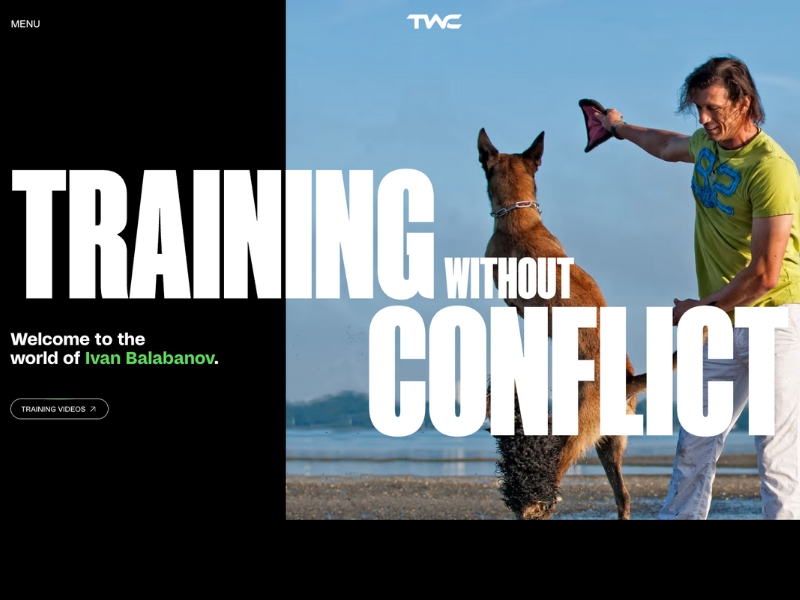
Training Without Conflict (TWC) is not suitable for most dogs or most owners.
It’s included here for transparency, not as a general recommendation. We do not endorse this methodology for puppies, everyday obedience, or general behaviour challenges. For the vast majority of dogs, general reward-based systems remain the safer and more appropriate choice.
This training is delivered through TWC’s Cornerstone Collection, a structured curriculum developed by Ivan Balabanov for professional trainers handling high-risk, complex behaviour cases. It’s designed for dogs that have failed to respond to conventional training and are no longer able to engage reliably in learning.
Rather than centring on food-based reinforcement or cue repetition, the framework prioritises emotional regulation through highly structured interaction (most often rule-governed play) where dogs learn to engage, accept limits, and recover without escalating.
This is what makes it controversial.
The methodology challenges the assumption that reinforcement alone can rehabilitate every dog by allowing structured pressure within interaction. Applied without experience or emotional awareness, it can cause harm, which is why we do not recommend it casually.
In practice, this framework appears most often in professional rescue, foster, and rehabilitation settings when conventional training has been applied properly, yet behaviour continues to deteriorate. Dogs referred to this approach often present patterns such as:
- Sudden explosive reactions around toys, food, or space
- Redirection onto handlers during frustration or arousal
- Escalate from ‘reactive’ to unpredictable or unsafe
- Cycle between intensity and shutdown with no middle ground
- Cannot tolerate pressure, limits, or structure without spiralling
In these scenarios, the issue is no longer how to train – it’s whether the dog can engage in training at all.
In a small number of cases, this framework has been genuinely transformative – restoring engagement and structure after conventional training has failed and options are running out.
For that reason, dismissing it outright ignores a reality repeatedly seen in professional rehabilitation work.
Would we use it as a first step? No.
Would we use it casually? No.
Would we consider it – carefully, and only when every conventional avenue has failed and options are limited? Yes.
When behaviour is deteriorating and standard approaches are no longer effective, this method (applied with experienced, individual handling) has shown the ability to halt a decline that can otherwise leave dogs with no viable alternatives.
12. Homemade Dog Treats (Training Support & Diet Control)
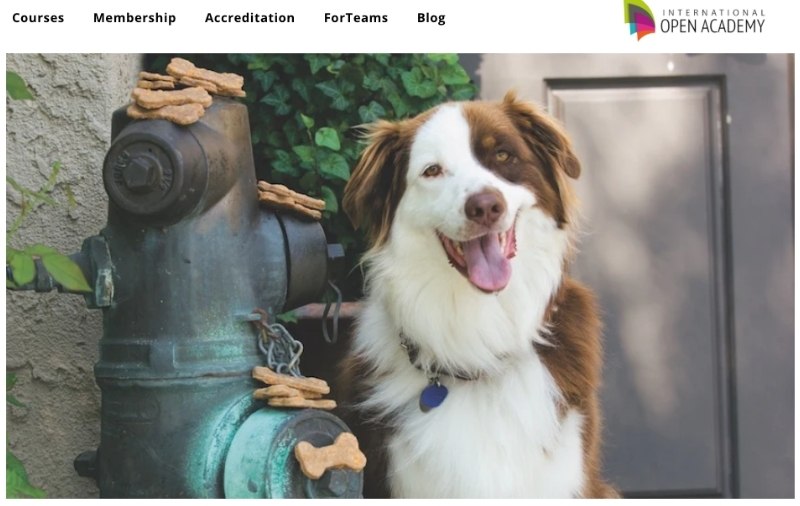
This course from International Open Academy focuses on homemade dog treats designed for dogs who train regularly. With over 100 recipes, it gives owners a way to create high-value training rewards without relying on processed commercial treats that can cause digestive issues, skin flare-ups, or inconsistent motivation over time.
That’s especially relevant when training is frequent. Dogs with sensitivities, weight concerns, or allergies often struggle with off-the-shelf treats, forcing owners to reduce reward frequency or switch products constantly – both of which undermine consistency. Making your own treats solves that problem by letting you control ingredients, portion size, and reward value.
Reliable, well-tolerated treats make reinforcement easier, training sessions more consistent, and progress smoother – especially in longer-term programs where reward volume adds up.
For owners who train regularly and want their rewards to support progress rather than introduce new problems, this course is a practical addition to the rest of the list.
13. Bonus Pick: Superhero Game Plan

Superhero Game Plan isn’t about obedience, behaviour, or fixing problems like most online dog training courses – it’s about having fun once the hard work is done.
This is an advanced trick-training course created by Success Dogs that shows how professional trainers teach the kinds of behaviours you usually see in movies and commercials. We’ve worked through it ourselves, and it’s genuinely enjoyable when your dog already has solid foundations.
The focus is on structure. Instead of guessing how professionals teach complex tricks, you’re shown the process clearly, turning ‘impressive’ into something repeatable. Examples include:
- Fetching drinks from the fridge
- Helping with laundry
- Tidying up toys
- Skateboarding
It’s ideal for owners who enjoy the training process itself and want to challenge their dog mentally in a creative way.
With a 30-day money-back guarantee, it’s easy to explore without risk. As a bonus option for turning training into a hobby (and having fun along the way) Superhero Game Plan fits the brief well.
Why is The Online Dog Trainer (Doggy Dan) Not on your List?
We get asked this a lot – and it’s a fair question.
The Online Dog Trainer was one of the earliest big names in online dog training, and for a long time it set the tone for what these programs looked like. But the space has moved on – and so have our standards.
When we reassessed the content, it didn’t consistently meet the bar we now hold for science-based, welfare-first training that we’re comfortable using across different dogs, breeds, and temperaments. Some of the underlying approaches feel dated compared to what’s available today.
That doesn’t mean it never helped anyone. It does mean we wouldn’t choose it now – and we won’t recommend something we wouldn’t confidently use ourselves.
Our goal isn’t to include what’s popular or familiar – it’s to recommend the best online dog training programs we would choose ourselves, right now, knowing what we know.

5 Tips for Training Your Dog at Home
Online dog training works when fundamentals aren’t skipped. These are the habits we see separate real progress from frustration.
1. Nail the basics before chasing results
Advanced behaviours collapse without solid foundations. Sit, stay, recall, and engagement should come first – taught using one consistent method. Skipping ahead usually creates problems you’ll have to undo later.
2. Make training rewarding, not exhausting
Dogs learn faster when training feels like a game, not a chore. High-value rewards, praise, and short sessions keep motivation high. If either of you is getting frustrated, the session is already too long.
3. Use the right tools (sparingly)
Good equipment can help, but it won’t fix unclear training. A harness, treat pouch, or clicker should support the method you’re using, not replace it. Simple setups, used consistently, tend to work best.
(If you’re upgrading your setup, see our vetted list of Excellent Dog Training Tools and Gadgets)
4. Practice consistently
Five focused minutes a day will outperform an hour once a week. Online dog training only works when everyone in the household follows the same rules.
5. Expect progress to be uneven
Training rarely moves in a straight line. Plateaus are normal, and progress often shows up after it feels like nothing is happening. Patience is part of the process.

Online Dog Training vs. In-Person: What Works Better?
For most dog owners, this isn’t a 50/50 decision.
In our testing, well-designed online training courses often outperform in-person sessions because they teach owners how to train – not just how to manage behaviour during an appointment. Training happens daily, in real environments, with repetition you can control.
Private trainers still have a place for severe cases or hands-on assessments. But for obedience, manners, focus, recall, and most behaviour work, structured online dog training programs consistently produce better long-term results when applied properly.
We’ve tested both extensively. The difference comes down to ownership, repetition, and follow-through – online training has the clear advantage.
Learn more about online vs. in-person dog training

Choosing the Right Online Dog Training Course
The courses in this guide earned their place by delivering online dog training that works in real homes, with real dogs (not by following trends or marketing formulas).
No single approach fits every dog. What matters is choosing a well-built program that matches your dog’s actual needs, then applying it consistently enough to judge progress on outcomes rather than promises. And a genuine money-back guarantee gives you the space to do that honestly.
When the structure is sound and the effort is consistent, training becomes far more predictable. Not overnight, and not perfectly – but steadily enough that both you and your dog can move forward with confidence.